|
|
Reorienting Education and the Social Sciences: Transitioning towards the Positive Anthropocene Rev 3
|
 |
This second edition of a book on human curiosity expands the original edition to include the relationship between curiosity and psychology, mental health and the role of art in the development of human feeling. The basic thesis of the book remains unchanged, that the present problems associated with research in education and the social sciences and their application regard us all as test subjects. Revisions offered by reviewers have led to minor changes and in the final chapter a more significant one regarding the example for a discussion of functional specialization. An Appendix on intervention in History ends the book. Axial Publishing, 2022 Vancouver, BC. Available on Amazon.ca/com
Available now from the author.
View Full Cover
|
A Reorientation of Education and the Social Sciences: Transitioning Towards a Positive Anthropocene
|
 |
This book presents human curiosity as a foundation and central dynamic for education and the social sciences. In doing so, it also provides a beginning for a new method
in the sciences, which as an extension of emergent probability (evolution), reaches for, and provides the structure and process for an intervention into history. This intervention
is designed to offset what is a negative Anthropocenic era in human history. The present problems associated with applied research in the social sciences to children and humanity
regards us all as lab rats. If we are to overcome this failure of the social sciences, there is the need to discover “what” we are, what in this book is referred to as self-identification.
Available now from Amazon.com
View Full Cover
|
Global Collaboration: Neuroscience as Paradigmatic - By Robert Henman.
|
 |
The three articles printed here point towards the need for a form of collaboration that is presently inoperative in neuroscience and, as McShane states in the Foreword, is not functioning in the current sciences at all.
The New Science is a division of labour and tasks that has the potential to increase the probabilities of cumulative and progressive results. Bernard Lonergan made this discovery in 1965 and called it functional specialization.
More recently, through the influence of McShane’s research and writings, it is more often referred to as, functional collaboration.
Available April 2016 from Axial Publishing
View Full Cover
|
Behind The Altar - A Novel By Robert Henman
|
 |
Behind the Altar is my first work of fiction. It is a dramatic exploration of the deficiencies of psychology in contemporary religious practice.
Behind the Altar can be ordered directly from the publisher Xlibris.com and amazon.com
and worldwide online. Also available from author.
View Full Cover
|
| |
THE CHILD AS QUEST - By Robert Henman
|
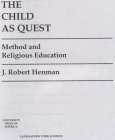 |
This book outlines a method in education based on the works of Bernard Lonergan. Formally published by UPA, 1984. Presently out of print. Library of Congress No. BV 1473.H46.1983
|
|